Could Homebuying Soon Be Quicker and More Transparent?
# Could Homebuying in England Finally Be Getting a Long-Overdue Overhaul? One in three property sales falls through. The average transac...

Surveys sit at the heart of almost every property transaction, yet they remain one of the most misunderstood parts of the buying process. Buyers often wonder whether they actually need one, and if so, which type. Sellers, meanwhile, are increasingly aware that a buyer’s survey findings can reopen price negotiations or, in the worst cases, collapse a sale entirely. Understanding what each survey level covers, and what it doesn’t, is useful knowledge for both sides of a transaction.
This guide focuses on the two surveys that matter most in practice: the Level 2 HomeBuyer Survey and the Level 3 Building Survey.
There is no legal requirement in England or Wales for a buyer to commission a survey before purchasing a property. Nothing compels you to do it. But the absence of a legal obligation is not a reason to skip it.
A mortgage valuation, which your lender will arrange, is not a survey. It tells the lender whether the property is adequate security for the loan. It says very little about the condition of the building, and it is not produced for your benefit. Structural movement, roof deterioration, concealed damp, ageing electrics: none of these are reliably picked up by a mortgage valuation.
The financial case for commissioning a survey is straightforward. Buyers who purchased without one faced an average of £5,750 in unexpected repair costs after moving in, and 17% ended up spending more than £12,000 to make their new home habitable (Homeowners Alliance, 2024). Replacing a roof alone typically costs £7,000, and can run to £19,000 or more depending on the property. A survey that costs £600 to £1,500 looks considerably cheaper in that context.
For sellers, a buyer’s survey is not something to fear, but something to prepare for. If your property has known issues, a buyer’s surveyor will almost certainly find them. Addressing minor defects before listing, or pricing the property to reflect its condition honestly, reduces the risk of a price reduction request arriving three weeks before exchange.
RICS introduced a revised Home Survey Standard on 1 March 2021, standardising residential surveys into three levels. The level you need depends primarily on the age, construction type, condition, and complexity of the property. Level 1 is a basic condition report suited to new builds and very straightforward homes; Levels 2 and 3 are the ones that matter for the vast majority of transactions.
Many people still refer to this as the HomeBuyer Report, its name before the 2021 RICS standardisation. It is the most commonly commissioned survey in the UK, accounting for an estimated 73% of all home surveys booked (Homeowners Alliance, 2025).
A Level 2 survey is a non-invasive visual inspection of the property’s accessible areas. The surveyor will not lift floorboards, move furniture, or open up walls, but they will inspect the roof space, drainage chambers, and all visible structural elements. The report flags significant visible defects: damp, subsidence, roof issues, and problems with services. It uses a traffic-light condition rating system (1, 2, or 3) to indicate the severity of any issues found, and it advises on what further investigation may be needed.
A Level 2 report does not include cost estimates for remedial work. It also provides only basic information on energy efficiency, typically noting the current EPC rating rather than offering specific upgrade advice. It does not diagnose the underlying cause of defects in any depth.
A Level 2 survey is appropriate for properties built after around 1930, of standard brick construction, with a pitched tiled roof, cavity walls, and no significant extensions or known structural history. If the property looks broadly conventional and well-maintained, a Level 2 is usually sufficient.
Of buyers who commissioned a survey, nearly a third took some form of action as a result of the findings (Homeowners Alliance, 2024). Ten per cent renegotiated the purchase price; 9% asked the seller to carry out repairs before exchange. For sellers, this is a reminder that a survey report is rarely the end of the conversation. It is, more often, the start of one.
A Level 3 Building Survey, formerly known as a Full Structural Survey, is the most detailed residential survey available. It involves a thorough, hands-on inspection: loft hatches are opened, drain covers lifted, and moisture meters used to test for damp in areas that a visual inspection alone would not reveal.
The resulting report typically runs to 50 to 100 or more pages. Beyond everything covered in a Level 2, a Level 3 survey identifies not just existing defects but those likely to develop in future. It explains the probable cause of each issue, the type of repair required, the likely cost, and the consequences of leaving the problem unaddressed. It also includes specific advice on improving the property’s energy efficiency, covering insulation, heating system performance, and ventilation.
A Level 3 survey does not automatically include a market valuation. If you need one, you will typically need to commission it as a separate service.
A Level 3 survey is appropriate for:
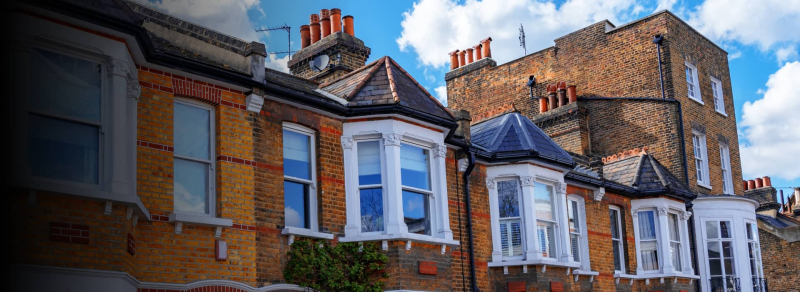
If you are buying an older South West London terraced house, a Victorian conversion flat, or any period property with a complicated history, a Level 3 survey is the sensible choice. The additional cost is modest relative to the detail it provides.
Survey costs vary by region, with London and the South East consistently at the higher end of the national range.
| Survey Level | Typical UK Cost | Typical London / South East Cost | Time on Site |
|---|---|---|---|
| Level 1 (Condition Report) | £300–£900 | Higher end of range | ~1 hour |
| Level 2 (HomeBuyer Survey) | £300–£850 | £400–£1000 | 2–4 hours |
| Level 3 (Building Survey) | £450–£1,500+ | £650–£1,800 | 4–8 hours |
(Homeowners Alliance, 2025)
The difference between a Level 2 and a Level 3 in London is typically £300 to £600. Against the backdrop of a property purchase, that is a small sum for a significantly more detailed picture of what you are buying.
If you are unsure which survey to commission, these questions will usually point you in the right direction:
When in doubt, the incremental cost of upgrading from a Level 2 to a Level 3 is almost always worth it. The survey is the one part of the buying process where spending slightly more upfront can save a significant amount later.
Whether you are selling a property in South West London and want to understand how a buyer’s survey might affect your sale, or you are a buyer trying to decide which report to commission before exchange, the Avrasons team can point you in the right direction. Sellers can book a valuation and talk through how to present your property in the best possible light; buyers can register with us to be matched with properties that suit their criteria and also book a survey: Book a survey


# Could Homebuying in England Finally Be Getting a Long-Overdue Overhaul? One in three property sales falls through. The average transac...


