What is going on with Mortgage rates?
Bank Rate, inflation and what could happen next Interest rates can sometimes feel like a very distant subject, but Bank Rate has

Japanese knotweed is one of those property issues that can derail a transaction fast. It affects mortgage offers, price negotiations, and a buyer’s willingness to proceed at all. Yet many people only discover it mid-sale, when a surveyor flags it and the clock is already ticking. A free, publicly searchable heatmap now makes it possible to check the risk before a sale is agreed or an offer is made. Whether you’re preparing to sell or looking to buy, knowing how to use it, and what to do with what you find, is worth a few minutes of your time.
Environet, a specialist knotweed removal company, publishes an interactive tool called Exposed: The Japanese Knotweed Heatmap. It’s a live, postcode-searchable map built from over 100,000 verified sightings submitted by the public and confirmed by experts. You type in a postcode and the map shows nearby reports, colour-coded by intensity from yellow through to red.
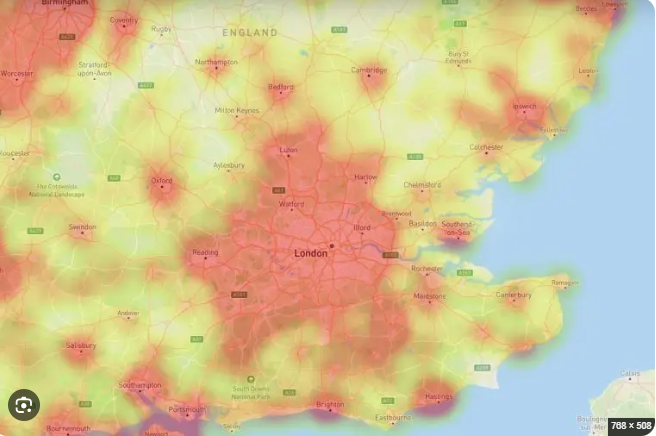
The data is updated continuously. From 2024 onwards, Environet shifted to reporting by county or unitary authority, measuring incidences per square mile rather than raw counts, which gives a clearer picture of local density rather than just total volume. It’s a practical tool, not a theoretical one: conveyancers, surveyors, and developers already use it to build a picture of risk before instructing formal surveys.
The numbers are worth sitting with for a moment. Around 7% of UK homes, equivalent to more than 1.58 million properties, are estimated to be affected by Japanese knotweed (Environet, 2026). Across the country, it’s estimated to wipe £21.4 billion from property values, with the average affected home losing around £13,500, or roughly 5% of its value (Environet, 2026).
Bristol is currently the most heavily affected area in England, with 1,342 confirmed incidences and 32.29 per square mile as of 2026 (Environet, 2026). Greater London sits third in the 2024 rankings, with 3,592 total incidences across the area, at 2.29 per square kilometre (Environet, 2024). For anyone transacting in South West London, that context matters. The borough-level picture varies, but the regional density means the risk of encountering knotweed, whether in a garden, on a boundary, or on adjacent land, is not negligible.
If you’re selling, the heatmap is a useful early warning tool, but it’s not a substitute for a proper survey. A nearby sighting on the map doesn’t confirm knotweed on your plot; it tells you the area has a history of reports and that a buyer’s surveyor is likely to look carefully.
The more important point is disclosure. Sellers are legally obligated to declare the presence of Japanese knotweed on the property information form (TA6) used in conveyancing. Failing to disclose it when you knew, or ought to have known, can expose you to a claim for misrepresentation after completion. If you have knotweed, getting a professional management plan with an insurance-backed guarantee in place before you go to market is almost always the right move. It removes the mortgage obstacle for buyers, reduces the grounds for renegotiation, and demonstrates you’ve dealt with the problem properly rather than hoping no one notices.
A treated property with a 10-year insurance-backed guarantee in place is a very different proposition to one where knotweed is discovered during the buyer’s survey. The former gives buyers and their lenders something concrete to work with; the latter typically triggers a price reduction, a delay, or a withdrawal.
For buyers, the heatmap is a sensible first check before you make an offer, not after. If the postcode returns red or orange, factor that into your due diligence. It doesn’t mean you should walk away, but it does mean you should instruct a specialist knotweed survey alongside your standard structural survey, rather than relying on a surveyor who may only note it as a risk rather than assess it in detail.
The mortgage position is worth understanding clearly. Most lenders will decline an application, or withdraw an offer, if knotweed is identified and no management plan is in place. Where a plan and insurance-backed guarantee exist, most mainstream lenders will proceed, though some apply additional conditions. If you’re buying with a mortgage and knotweed comes up during the survey, your conveyancer will need to confirm the lender’s specific requirements before you can exchange.
Almost a third of UK adults, 32%, say they would not buy a property affected by knotweed under any circumstances (Environet, 2026). A further 31% would consider it if a treatment plan and price reduction were in place (Environet, 2026). That split matters for buyers in a negotiating position: if knotweed is confirmed, there is a reasonable basis for seeking a price adjustment, and the seller knows that walking away and relisting carries real risk.
Treatment has changed over the years. In 2015, 74% of Environet customers chose herbicide treatment; by 2025, that figure had fallen to 49%, with more customers opting for physical removal methods instead (Environet, 2025). Physical removal is faster and, where the budget allows, tends to produce a cleaner result for sale purposes, since there’s no ongoing treatment programme for a buyer to inherit.
The key document in any transaction involving knotweed is the insurance-backed guarantee. A 10-year IBG, issued by an accredited specialist, protects both the buyer and the lender if the plant returns. Without it, you’re unlikely to reach exchange. With it, the transaction can proceed much as normal, though the price may already have been adjusted to reflect the history.
The process is straightforward:
The heatmap won’t tell you whether a specific garden is affected. What it does, reliably, is tell you whether you’re in an area where the risk is real enough to warrant proper investigation.
If you’re selling in South West London and want to understand how to handle a knotweed issue before it becomes a problem mid-sale, or if you’re a buyer who’s found something on the heatmap and wants to know what to do next, the team at Avrasons can point you in the right direction. Sellers can book a valuation through our contact page, and buyers looking for available properties or wanting to register their requirements can do so at avrasons.co.uk/registration.
It can. If knotweed on adjacent land is close enough to encroach on your boundary, lenders and buyers may treat it similarly to an on-site infestation. A specialist survey will clarify whether there is active encroachment and what, if anything, needs to be done.
Most mainstream lenders will decline unless a professional management plan with a 10-year insurance-backed guarantee is in place. Once that documentation exists, the majority of lenders will proceed, though individual lender policies vary and your conveyancer should confirm requirements early.
Yes. Sellers must declare the presence of Japanese knotweed on the property information form (TA6) as part of the conveyancing process. Knowingly failing to disclose it can result in a misrepresentation claim from the buyer after completion.
The Environet Exposed heatmap is based on over 100,000 verified sightings and is updated continuously. It gives a reliable picture of local risk but cannot confirm whether a specific garden or plot is affected. A specialist survey is needed for a definitive assessment.
Yes, but it is significantly easier if a professional treatment plan and insurance-backed guarantee are already in place before you go to market. Without them, buyers face mortgage difficulties and are more likely to renegotiate or withdraw, so addressing the issue before listing is almost always the better approach.


Bank Rate, inflation and what could happen next Interest rates can sometimes feel like a very distant subject, but Bank Rate has
If you’re purchasing a property in Oval, you’ll almost certainly have received a recommendation to carry out a survey on your desired

Council tax hasn't been meaningfully reformed since 1991, and pressure for change is mounting. With a mansion tax confirmed for April 202...


