Could Homebuying Soon Be Quicker and More Transparent?
# Could Homebuying in England Finally Be Getting a Long-Overdue Overhaul? One in three property sales falls through. The average transac...

Choosing where to live in South West London depends on what matters most to you: commute time, budget, schools, green space, nightlife, or a stronger sense of community. This part of London covers a wide mix of areas, from village-like neighbourhoods near Richmond Park to busy town centres such as Clapham and Wimbledon. That variety is one of its biggest strengths. You can find period homes, new flats, riverside streets, large commons, strong state schools, and fast links into Central London, often within a few miles of each other.
South West London is also one of the capital’s most searched-for places to live because it offers a balance many buyers and renters want. Several boroughs in this part of London have large amounts of parkland, and Richmond upon Thames is often noted as one of London’s greenest boroughs. Commute times are another draw, with many areas served by National Rail, the District line, the Northern line, trams, buses, and major roads such as the A3. If you are asking where to live in South West London, the best answer comes from matching the area to your daily life rather than choosing the most expensive postcode.
Richmond, Wimbledon, Putney, Balham and Clapham are often near the top of the list when people look for the best places to live in South West London. Richmond stands out for its riverside setting, strong high street, rail and Underground links, and direct access to Richmond Park, which covers around 2,500 acres. Wimbledon has a broad appeal too, thanks to its town centre, Village, common, rail station and District line. Putney works well for people who want the Thames, green space and a straightforward commute, while Balham and Clapham are popular for their cafés, restaurants and lively feel.
Each of these areas suits a different kind of move. Richmond and Wimbledon usually attract buyers who want more room and a settled setting best suited to families that still need commuting into the city. Balham and Clapham tend to suit renters and first-time buyers looking for a social scene and quick transport. Putney sits somewhere in the middle, offering a practical mix of value, access to the river and decent links. If you are comparing South West London neighbourhoods, it helps to list your priorities first:
For families, Wimbledon, Richmond, Kingston, Barnes and East Sheen are among the strongest choices. These areas have more houses with gardens than many inner London districts, and they offer easy access to parks, commons and sports clubs. Wimbledon Common, Richmond Park and Bushy Park give children space to run around without leaving London. Kingston is also a major draw because it combines family housing, shopping, leisure facilities and rail links, with the added benefit of being close to the river.
Another reason families look closely at these areas is schooling. Many parts of South West London have well-regarded state primaries and secondaries, alongside independent options. Barnes and East Sheen are especially popular with parents who want a quieter street pattern and a more local high street feel. Teddington and Twickenham also deserve attention, particularly for families who want larger homes slightly further from Central London while staying within reach of rail connections and good local facilities.
South West London is not widely known for low prices, but there are still areas that can offer better value than Richmond, Wimbledon Village or Barnes. Tooting, Earlsfield, Colliers Wood, Norbury and parts of Wandsworth often come up in searches for more affordable areas in South West London. Tooting remains popular because it has strong transport, a busy high street, good food options and housing stock that ranges from flats to Victorian terraces. Earlsfield can also be a smart choice for buyers and renters who want a solid rail service without paying Wimbledon prices.
Colliers Wood often attracts first-time buyers because it sits on the Northern line and has lower prices than nearby hotspots. Norbury may suit those prepared to look a little further out in return for more space. In practice, affordability is not just about headline asking prices. It also means looking at:
Safety is one of the biggest factors when choosing where to live in South West London. Richmond, Kingston, Wimbledon Village, Barnes and East Sheen are often viewed as some of the safest places to live in South West London, largely because of their residential character, quieter streets and stronger sense of local community. Many of these areas have lower crime rates than busier inner London centres, though crime patterns can change street by street, so checking local police data is always worth doing before you move.
It is also useful to think beyond borough-wide figures. Areas with busy stations and late-night venues may report more theft and anti-social behaviour simply because more people pass through them. By contrast, roads a short walk away can feel very different. If safety is your top concern, visit at several times of day, check lighting, look at walking routes from the station, and review recent crime maps rather than relying on reputation alone. That gives a much clearer picture of daily life.
Young professionals often focus on Clapham, Balham, Putney, Wandsworth Town and Tooting. These areas tend to offer the mix this group wants: fast transport, shared rental options, gyms, pubs, coffee shops and places to eat. Clapham has long been one of the main draws for young renters in South West London because the Northern line makes it easy to reach the City and the West End. Balham offers a similar appeal with a slightly more local feel, while Wandsworth Town has grown in popularity through new-build schemes and easy rail access.
Putney works well for professionals who want a less hectic setting without giving up convenience. Tooting has also become a favourite thanks to its food scene, stronger value and good connections. If nightlife matters, Clapham and Balham usually lead the list. If cost matters more, Tooting and Earlsfield often look better. For buyers, the right choice often comes down to whether you want short-term energy or a place you can stay in for several years as your needs change.
For commuters, transport speed matters more than postcode prestige. Forget Wimbledon and Richmond, Look at Oval, Stockwell & Vauxhall/Nine Elms as these are some of the best South West London areas for commuters. Clapham Junction is one of Britain’s busiest railway interchanges, with a wide range of services into Victoria and Waterloo as well as routes across London and beyond. Combining National Rail, the Northern & Victoria Lines, making it one of the most flexible commuter hubs in this part of the capital.
If your job involves regular travel, checking the full journey door to door matters more than the number of stations nearby.
If access to parks is high on your list, South West London is one of the strongest parts of the capital. Putney Heath, Wandsworth Common and Clapham Common add to the area’s appeal, especially for runners, dog owners and families who want outdoor space close to home.
Living near green space can shape daily life more than many buyers expect. It affects weekend plans, exercise habits, walking routes and even how crowded an area feels. East Sheen is a strong example of this. It gives easy access to Richmond Park while keeping a more residential feel than some nearby centres. Teddington is another good pick for people who want parks, the Thames and a slower pace without giving up rail links.
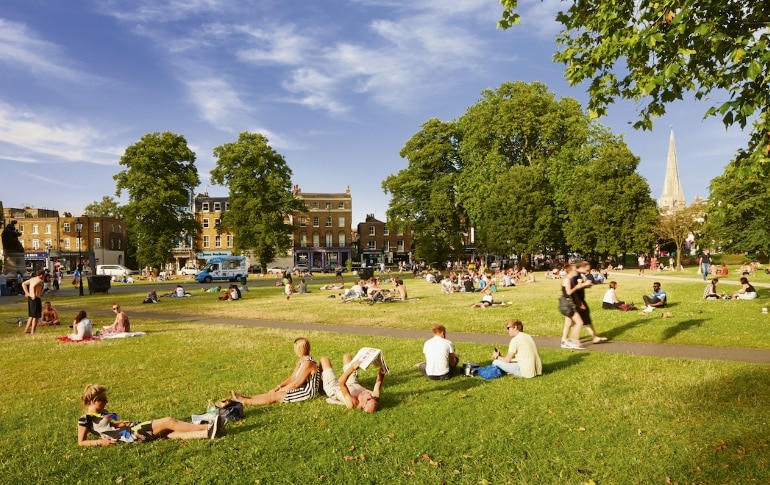
When schools lead the search, there is no need to look further out, there are many great primary schools in and around Oval, Stockwell, Clapham & Tooting.
Avrasons proudly sponsor Christchurch Primary SW9 located in the heart of Oval. https://christchurchschool.cc/
The right area depends on how you live day to day. A family with two children and a need for school places will not judge an area in the same way as a first-time buyer looking for nightlife and a fast train. Start with your non-negotiables, such as budget, commute, home size and school access. Then add lifestyle points like green space, shops, cafés, gym access or whether you want a busy high street or a quieter road. This usually narrows the search far faster than reading general “best areas” lists.
It also helps to visit your shortlisted neighbourhoods more than once. Go on a weekday morning, a weekday evening and a weekend afternoon. Walk from the station, look at the condition of the streets, and spend time in the local centre. In South West London, small changes in location can make a big difference to cost and feel. A home ten minutes from a major station may offer better value while still giving you most of what attracted you to the area in the first place.
South West London offers something for almost every type of mover, from the nightlife of Clapham to ease of commuting from Oval & Stockwell and the amazing food scenes of Brixton and Tooting with the stronger-value options in Tooting and Colliers Wood as you work your way down the Northern Line.
If you want help narrowing down the best area for your budget and lifestyle, contact us for further help and advice regarding where to live in South West London.
Avrasons – your local independent agent covering South West and South East London since 1965.


# Could Homebuying in England Finally Be Getting a Long-Overdue Overhaul? One in three property sales falls through. The average transac...

Heatwaves are no longer a rare British curiosity — they're a recurring summer reality, and flat-dwellers face the worst of it. With warm ...

From Kennington flats at £435,000 to Clapham terraces nudging £1.2 million — South West London's property market is anything but uniform....


